Bio
Traditional Bio Stuff
HIGHLIGHTS
My So-Called Life
Sigh. Promo Copy. Photos. A Narrative.
PAGES
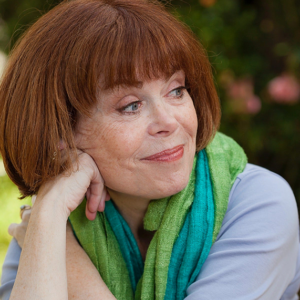
Amanda McTigue’s debut novel Going to Solace was named a Best Read of 2012 by public radio KRCB’s “Word by Word.” Her short stories have garnered a Pushcart Prize nomination, an Editor’s Pick, and a semifinalist nod from the American Literary Review fiction contest. Her short stories have appeared in Literally Stories, 99 Pine Street, and The Writing Disorder. She learned book design in order to publish two children’s books of poetry, DreamTime and Once Upon a Lullaby. They made her then-four-year-old niece a published illustrator, a credit that proved useful when she applied to college years later. Amanda’s second novel, The Cautionary Tales, is currently in submission.
STAGES
Amanda’s libretti and plays have been produced at the Minnesota Opera, Carnegie Hall, and the Wonderhorse Theatre in New York City, as well as Sonoma State University. From 2000 to 2017, she directed many of SSU’s opera and music theater productions. She and composer Jeff Langley collaborated for forty-four years. Their works run a crazy gamut from grand opera to hits singles on the club dance scene. Her texts for art songs, choral works, and contemporary jazz standards have been presented at the Green Music Center, Cinnabar Theater, U.C. Merced, the Oakland Symphony Chorus, the Santa Rosa Choral Academy, and Sonoma Bach. You can hear local soprano Jenni Samuelson singing her “Once Upon a Lullaby” song cycle on streaming platforms, or mezzo Bonnie Brooks’ jazz singles “Cat Eyes,” and “You’ll Be the Death of Me.”
DIRECTOR/PRODUCER
From 1990-1999, Amanda executive-produced live entertainment for Knott’s Berry Farm and Paramount/Viacom. Her years in commercial theatre led to later consultancies with the Thinkwell Group L.A./China, the Hettema Group, and Walt Disney Entertainment. She found herself writing backstories for Hello Kitty™, and auditioning German actors (in German) for roles in the Star Trek™ World Tour, Deutschland. Projects have included The National WWII Museum, “Mystic River” at Tokyo DisneySea, and numerous international ventures that are still in development.
COACH
Today Amanda coaches writers on the one hand, and performers on the other, particularly actors and actor-singers through affiliations with the National Association of Singing Teachers and Sonoma State University. She makes regular appearances in the Bay Area with lectures and workshops. She’s been a featured reader at San Francisco’s Lit Crawl, and was a two-time champion of West Side Stories, her hometown’s live storytelling competition.
My Long-Story Short
A quick history in my own words
THE OVARIAN LOTTERY
How did all of this happen? Good fortune and great teaching.
My father’s people were Irish-American; my mother’s went generations deep in the deep South. We’re talking talkers. Two families of talkers who couldn’t abide each other’s talk. Catholic vs. Protestant. Northern vs. Southern. Immigrants who were never permitted to forget they were immigrants suddenly in-law’ed to immigrants who conveniently denied their colonial history, claiming, instead to be “authentic” Americans.
I was fortunate enough to split all my pre-college years between these two worlds. I went to a fancy prep school at the National Cathedral in Washington, DC, steeping myself in academics (which I loved) while performing my fool head off as a singer and actor (driven by love). Meanwhile, I spent my summers in the Blue Ridge Mountains of North Carolina during those pre-cable years when, because TV reception was lousy in the mountains, we children pursued the pastimes of the past—square dancing, banjo picking, crafts making, trout fishing, bear-avoiding, and so on.
HITTING THE ROAD
Thinking my life might be about classical singing, I took a year off before attending college to study voice at the Conservatoire Darius Milhaud in France. I was on my way to Yale but they gave me the year to “find myself” before hitting campus. It was a helluva of an adventure, one I’ll save for my memoir. Suffice it to say, it included running off with my high-school English teacher, trailing around together in a used VW bug as I auditioned in various European cities before settling into a garret—yes, a real garret—in Aix-en-Provence. I studied with Christie Castelli, a spectacular dramatic soprano. Dramatic sopranos are the biggest voices on earth. I, on a good day, had one of lightest voices on earth. Nevertheless, she was encouraging. Our accompanist was dapper M. Reynaud, who indeed looked like a fox cut in the Wes Anderson mode. Mme. Bonas taught me solfege and piano. She had a half-life-sized crucified Jesus hanging over her upright. She used a ruler on my knuckles when I got things wrong.
AN IVY SAND BOX
Fortified by these experiences, I hit the ground running at Yale. What a privilege, what fun, even drowning in the typical depths of despair that undergraduates are prone to. I’d been in an all-girls school since the fourth grade. Now here I was part of the fourth class of undergraduate women ever to attend that all-male institution. The ratio of men to women on campus was about 25 to 1. Yet more fodder for my memoir. For four years I got to study with the likes of Robert Penn Warren, and Cleanth Brooks, Ruth Day, Fred Thompson, Vincent Scully, Austin Pendleton, Olympia Dukakis, Maury Yeston, Louis Dupré, and Karsten Harries. But never mind the teachers, it was my fellow students, dazzlers all, who shaped my life and inspire me still. I graduated in 1977 with a degree in Philosophy and some academic awards, choc-a-bloc with enthusiasm, but nothing resembling a plan for life.
SMALL-TOWN GIRL, BIG CITY
Bifurcation is a theme here. At some point in those last months of college, I realized my aptitudes gave me a choice: either pursue academia and live in my head, or pursue performing and live in my body. I chose the path that was less natural for me. I chose my body. I headed to New York City to study acting, but of course I had to pay my rent, so I spent the next thirteen years juggling jobs on the one hand, arts on the other.
In the old days, this would be the point in my bio where I’d emphasize all the creative work I was doing at the time. But now it seems to me the gold was in the day jobs. While living a double-life exhausted me, I know I was lucky not to have inherited a fortune. I learned to hustle. I leaned to fail. I learned to fight because I had to. I met people I’d never have met otherwise: landscape designers, high-powered real-estate lawyers, earnest environmental activists, comedians, moguls, circus roustabouts. I answered the phone for Henry Kissinger. I negotiated extra towel requests for O.J. Simpson. I claimed I knew how to use a computer, then taught myself to do so on the job.
LEMONS TO LEMONADE
All the while I was writing. For reasons only the Muses can explain, an idle evening in a bathtub during my first weeks in New York City led to my writing an opera libretto. I teamed up with composer Jeff Langley, a Juilliard doctoral candidate, to write The Autumn People. Our collaboration lasted for forty-four years until he died.
Determined to secure union membership as a performer, I wrote an original musical play, cast myself in it, and produced the resulting production Off-Broadway. The strategy worked: I became an Equity actor, but by that time, I couldn’t care less. I’d found my true calling. Writing suited me. Imagining worlds, setting them into motion, that’s where satisfaction lay.
The hustle continued. In the mid-80s, Jeff and I founded our own Billboard-charted pop music publishing and record company. Yikes. A heart-breaking detour in my life, but I learned a lot.
My last New York production was in Carnegie Hall. January, 1991, I wrote and directed an AIDS fundraiser called, “Children Will Listen” (title courtesy of Stephen Sondheim). This was during the years when the world was still denying that HIV/AIDS was a disease that threatens everyone. The cast included Richard Dreyfus, Kathleen Turner, Leonard Bernstein, Lauren Bacall, Raul Julia, Patti Austen, the Harlem Boys Choir and M.C. Lyte—the first rapper, not to mention female rapper, ever to play that hallowed venue.
A PhD IN LIVE ENTERTAINMENT
With the ‘90s, it was time for a change. For reasons that belong in the memoir (idealism; boyfriend; fantasies about life outside New York), I took a job across the country at the epicenter of popular culture: Southern California. For four years, I headed up the Entertainment Division of Knott’s Berry Farm, a family amusement park.
The second I arrived at Knott’s, I thought I’d made a “wrong” turn—one I wouldn’t trade for anything today. I dove into commercial entertainment knowing I’d learn things the rarified world of Manhattan could never teach me. I went hands-on with artists and people whose stories changed me. Operational experts, maintenance crews, food service pro’s, make-up artists, stunt men, security guards, labor lawyers, dolphin trainers, pony ride operators, Hopi craftswomen and Aztec dancers, can-can “girls” and lasso twirlers, on and on. With people flooding into the Park by the thousands every day, I learned to write fast. My repertoire expanded to include the 15-minute musical, the 20-minute Dickensian play, the themed, narrative circus (pre Cirque du Soleil), and all kinds of meta-linguistic storytelling.
At the same time, I continued to write for the arts. A commission from the Minnesota Opera, for example, led me to translate the lyrics of Franz Lehar’s The Merry Widow, re-conceived to take place in 1930s Hollywood. I did the work in the wee hours after Knotts closed for what turned out to be a knock-out premier production in St. Paul.
THE ROLLER COASTER OF INTERNATIONAL I.P.
Things change. My mom got sick. I came home to the Blue Ridge Mountains to help her die. After, I decided to stay East and pay my bills as a freelance writer. That worked until one of my clients called. Viacom/Paramount Parks and Entertainment had an office in Charlotte, NC. Their Vice President of Entertainment, Rod Rankin, was a dynamo, and one of the fun-nest guys I’ve ever gotten to work with. He enticed me to rejoin the world of commercial entertainment. As an Executive Director at Paramount for another three years, I guided show development for Viacom’s live theater operations.
PUTTING IT TOGETHER
That gave me the platform to set up a life of consulting I’ve done since, integrating—miracle of miracles—the bifurcation(s) in my background. I’ve gotten to brainstorm and write for both arts and commercial clients on serious cultural projects and fantasy amusement meccas. It’s my great privilege to think-speak-write in/for varied worlds.
These days, what joy. Playwriting has given me an ear (or perhaps my ear gave me playwriting). Directing has given me embodied worlds and characters. Meanwhile life has piled me up with stories, so many I’m scrambling to get at least a few of them down.